
Mike Woodward
AI Development Lead & Senior Clinical Scientist in AI
The Case for In-House Autocontouring
1 September 2026
Featured image: Photo by Craig Cameron on Unsplash.
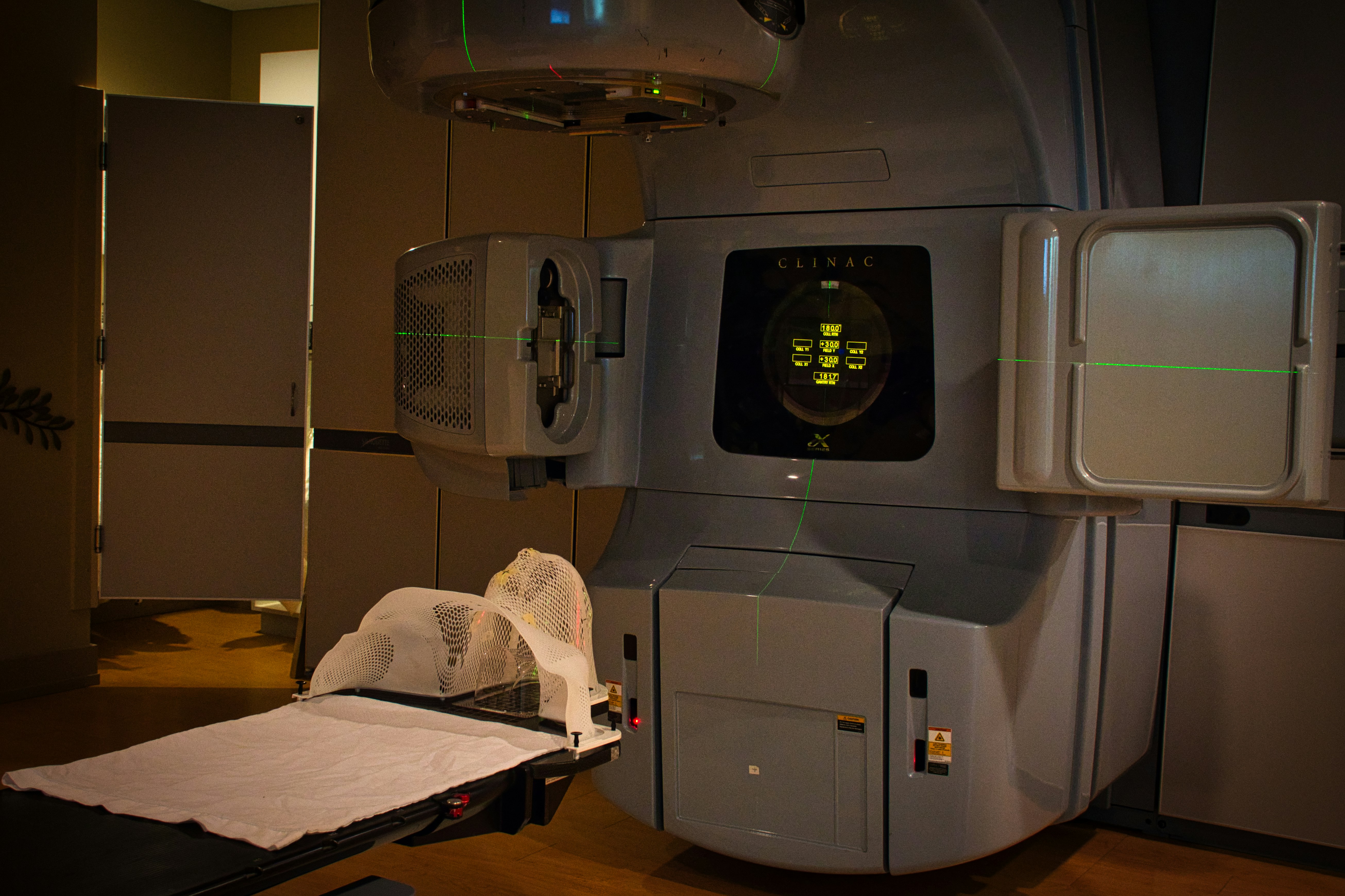
Contouring is a crucial component of patient care within the radiotherapy pathway, partly involving outlining the organs at risk to ensure that a treatment plan doesn’t deliver avoidable harmful doses of radiation to these critical regions. As you can imagine, manually performing this for each patient is a time-intensive task, often performed by a consultant clinician, that is ripe for automation. However, the idea of this article isn’t to sell you on the value of autocontouring; I’ll let others do that. Autocontouring has been described as ‘game-changing’ by the UK Government, who in 2024 allocated £15.5 million for it to be rolled out to all NHS radiotherapy departments. This funding was subsequently cut, leading to outrage amongst clinicians who were already utilising the tools. Rather, I’m hoping to sell you on the value of in-house autocontouring solutions.
With in-house autocontouring solutions, we control the data used to train the model. Despite the existence of published guidelines, contouring is surprisingly cultural. Conventions, such as where the brainstem ends and the spinal cord begins or even what counts as a distinct organ, can change from one centre to another. Commercial products cannot account for this, whereas an in-house solution can. By training on scans from our trust, we can also ensure that the model performs well for our population demographics and with our imaging equipment. Again, commercial products cannot guarantee this. Not only have we found this to improve model performance based on raw metrics, but, just as importantly, it builds the trust our clinicians have in using the model. They see contours that are familiar while having complete knowledge of the data that was used to generate them.
Additionally, we can operate at pace. Once the data is collated, we can train and have a model ready for deployment within 24 hours. While this is incredibly useful for quickly spinning up evaluations prior to full clinical deployment, the real value is found in rapidly updating models. Given new guidance or perhaps a recurring problem with a contour, or even just changing the name of a contour, our clinicians are not beholden to commercial release schedules.
An in-house solution is arguably more robust in the long term due to avoiding vendor lock-in. There is no risk of sudden increases in costs making the solution no longer viable as a business case. Of course, there are downsides here as well: you’re reliant on your own infrastructure and you now have a service to maintain. But, at least for our department, the positives outweigh these negatives.
It’s not just theoretical. Here at GSTT we have deployed three in-house-developed autocontouring models into clinical use: pelvis and prostate, head and neck, and thoracic. Together, their use covers 39 structures and improves the care of over 1000 patients a year, with incredible feedback from clinicians.
There are numerous other models in the pipeline, too, with the most exciting among them being for cervical brachytherapy. The introduction of this model could have a significant positive impact on the patient experience by reducing the time each patient spends undergoing treatment by up to an hour.
The in-house approach works for us because we have the necessary ingredients available. We not only have a dedicated in-house team, with the time, knowledge, and expertise to train complex models, along with engaged clinical leads within the Radiotherapy department, but we also have the necessary infrastructure to facilitate these projects, from access to GPUs to a fully connected deployment platform. So, while I have been fully advocating for this approach, I appreciate that it may not be reproducible in all NHS trusts.
That being said, if you are looking to set up your own in-house autocontouring service, or if you are missing just one or two of the pieces in order to do so, we offer our expertise on a consultancy basis. If that is of interest to you, please do reach out to us.
Follow us on LinkedIn for more updates on CSC activities.